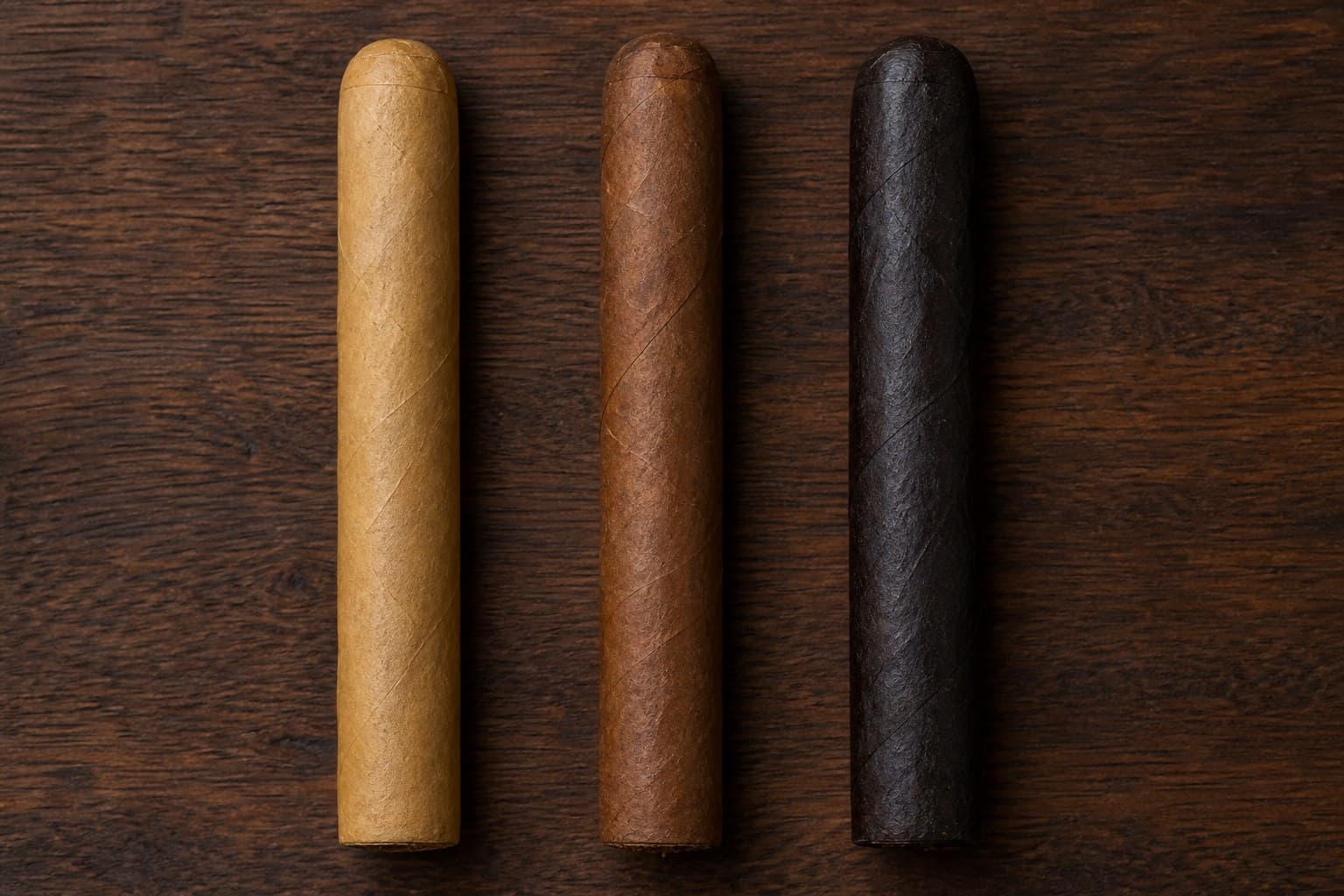
Cigar wrapper types explained simply: the outer leaf drives a huge share of aroma, sweetness, and perceived strength. Connecticut leans creamy and mild; Habano brings spice and earth; Maduro pushes cocoa and coffee. Learn the main families so you buy with intent—and tag wrapper on every journal entry.
What the wrapper actually does
A cigar has filler, binder, and wrapper. The wrapper is the show leaf: thinner, carefully grown, and responsible for much of the first impression. Filler still sets body and complexity—but if you only remember one buying filter, start with wrapper.
When shop bands blur together, a cigar band scanner app keeps the line name accurate while you focus on leaf type.
Major wrapper types at a glance
| Wrapper | Typical profile | Reach for it when… |
|---|---|---|
| Connecticut shade | Cream, hay, soft nuts, mild | Daytime, new smokers, coffee |
| Connecticut broadleaf | Earthier, richer than shade | You want mild-medium with depth |
| Cameroon | Peppery sweetness, toothy leaf | Nuanced medium smokes |
| Habano | Spice, earth, cedar, pepper | Structured, classic profiles |
| Maduro | Cocoa, coffee, molasses, sweet earth | Evening, dessert, bold bourbon |
| Candela / others | Grassy / specialty niches | Curiosity buys and rare finds |
Connecticut: the gateway leaf
Shade-grown Connecticut is the mild classic—smooth, creamy, forgiving on the tongue. Broadleaf Connecticut runs darker and fuller while staying approachable. Ideal when you’re learning cut and light technique without fighting a pepper bomb.
Habano: spice and structure
Habano (often Cuban-seed, grown in places like Ecuador or Nicaragua) delivers the peppery, earthy spine many people mean by “classic cigar flavor.” It pairs beautifully with rye-leaning pours—see bourbon and cigar pairings.
Maduro: sweetness from time
Maduro wrappers are fermented longer for darker color and deeper, sweeter tones. Not automatically “stronger”—just richer. For the head-to-head, read Maduro vs Habano cigars.
How to shop by wrapper without getting lost
- Pick a lane for the night — mild, spicy, or sweet.
- Confirm on the band/box — color alone misleads.
- Scan into inventory — keep names clean in a virtual humidor.
- Tag wrapper in notes — patterns appear after five honest journals.
Myths worth retiring
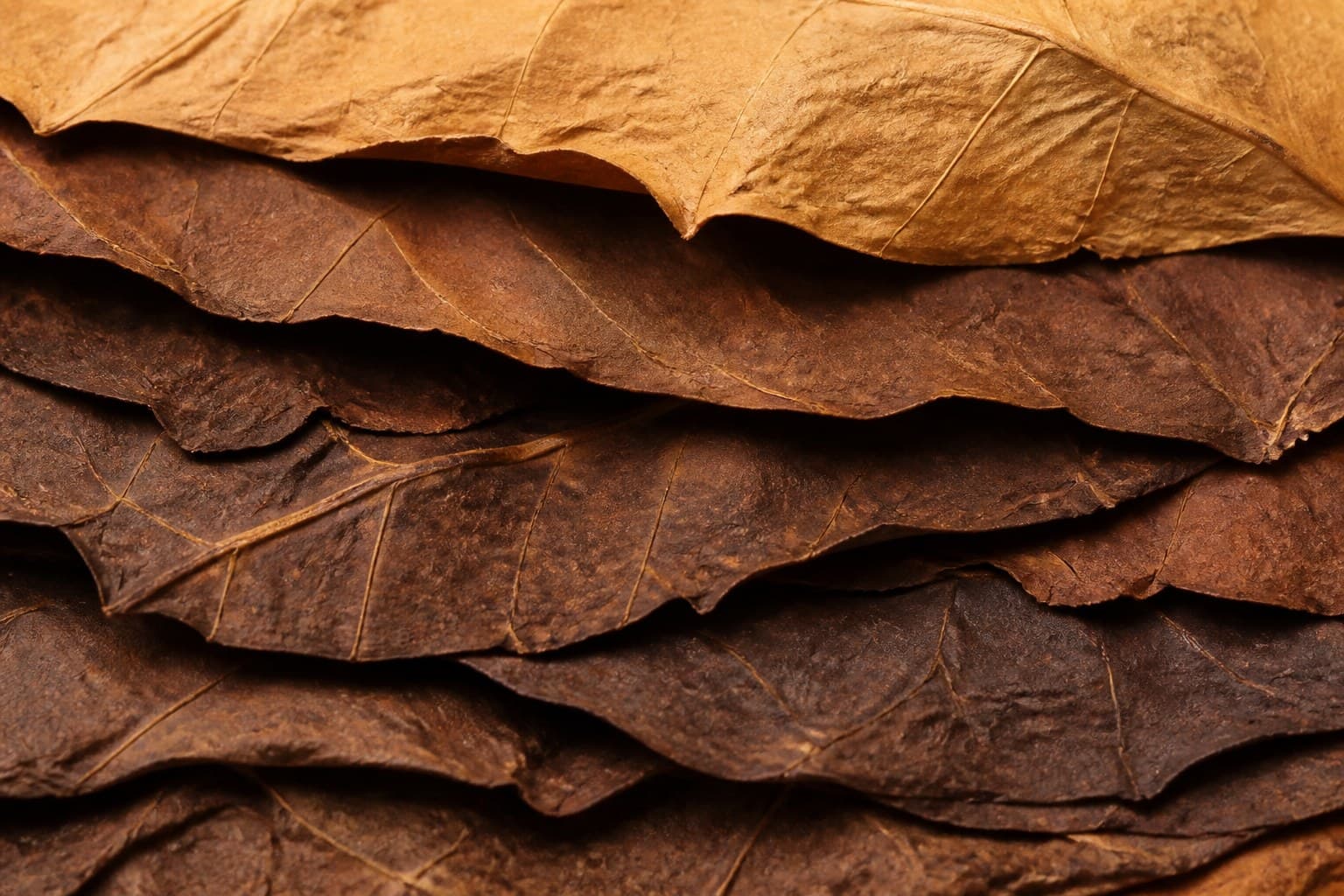
- “Dark always means strong” — fermentation ≠ nicotine alone
- “Mild means boring” — Connecticut can be nuanced
- “Wrapper is everything” — filler still carries the engine
Bottom line: Use wrapper as your first filter, confirm the blend, and write it down. Palate memory compounds when the leaf type is searchable.
Frequently asked questions
Straight answers for search, lounges, and late-night humidor debates.
Does the wrapper determine cigar strength?
It heavily influences perceived strength and flavor, but filler and binder matter too. A dark Maduro can still be medium; a Connecticut can hide a punchy core—taste and notes beat assumptions.
What is the mildest common wrapper?
Shade-grown Connecticut (and similar light wrappers) usually reads mildest: cream, hay, soft nuts. Ideal for daytime or new smokers learning draw and cut.
What’s the difference between Habano and Maduro?
Habano is typically a spicy, earthy Cuban-seed style leaf. Maduro is a darker, longer-fermented leaf with sweeter cocoa and coffee tones. See our Maduro vs Habano guide for a full comparison.
Should I choose cigars by wrapper color alone?
Color is a hint, not a guarantee. Use wrapper type as a starting filter, then confirm origin and blend—and scan the band so your inventory stays accurate.
Why note wrapper in a cigar journal?
Patterns emerge fast: you may love Habano with rye and Maduro with dessert bourbon. Wrapper tags make those patterns searchable.
Further reading
Related guides in the Estelia & Ash Co journal.