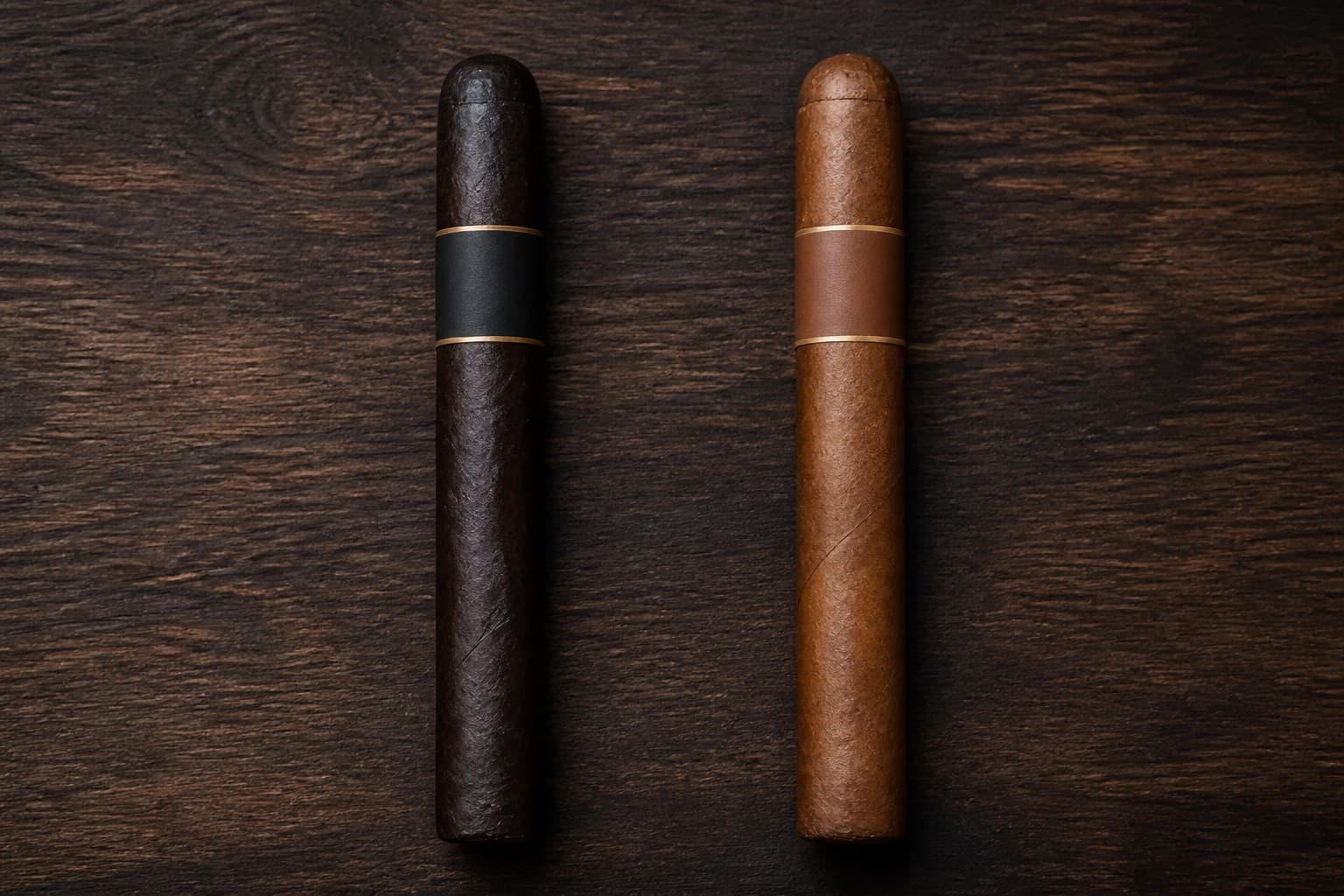
Maduro vs Habano cigars is one of the most useful wrapper decisions you’ll make. Maduro tends sweeter—cocoa, coffee, molasses—from longer fermentation and darker leaf. Habano leans spicy and earthy with pepper and cedar. Strength still depends on the full blend; choose based on flavor mood, then log what you loved.
Quick comparison
| Dimension | Maduro | Habano |
|---|---|---|
| Flavor | Cocoa, coffee, sweet earth | Pepper, cedar, earth, spice |
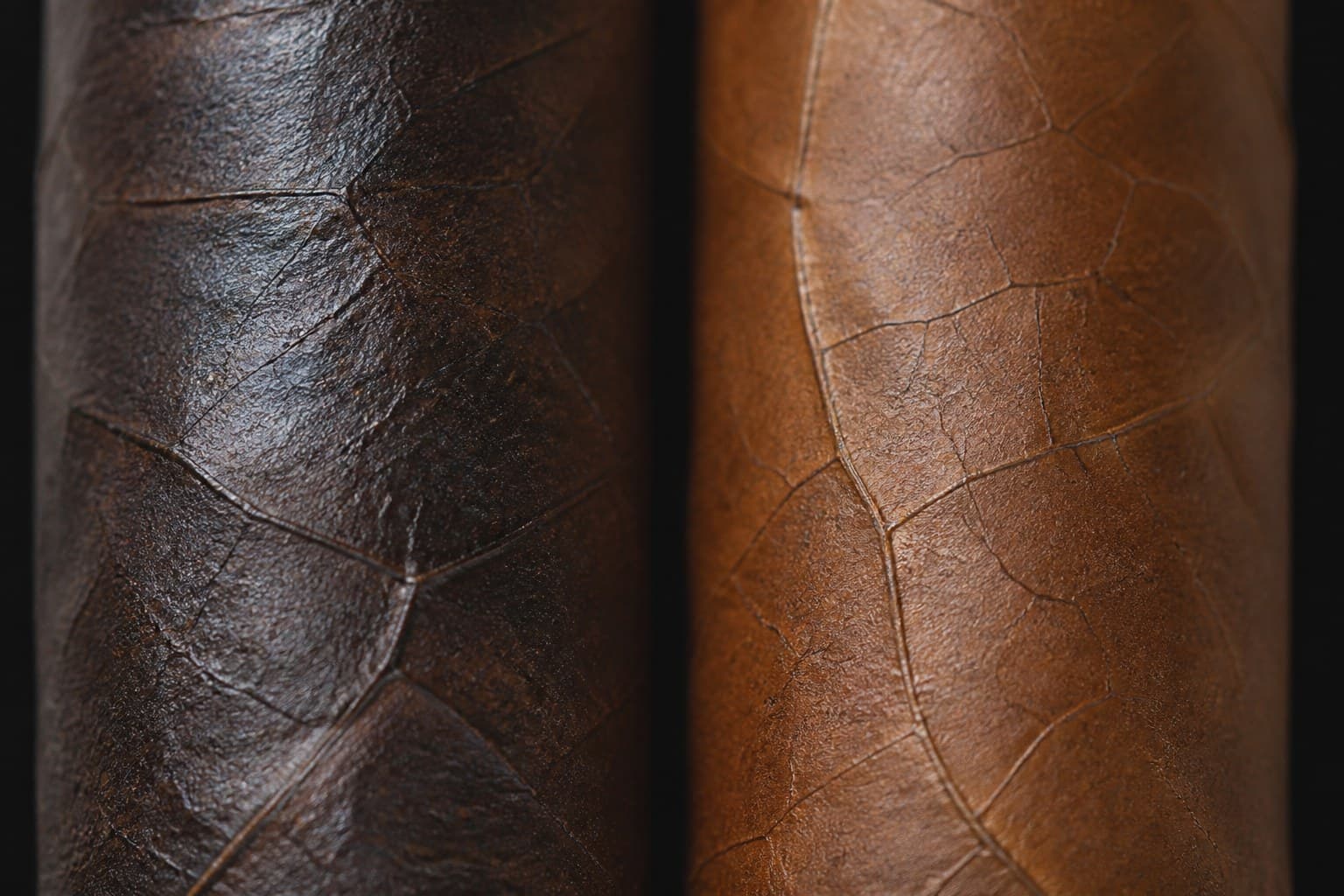
| Look | Darker, often oilier sheen | Medium-brown, lively sheen |
| Process | Longer fermentation (“ripe”) | Cuban-seed style character |
| Mood | Dessert, evening, bold pours | Structure, spice, classic profile |
| Bourbon lean | Sweet oak / higher proof | High-rye / peppery pours |
For the wider leaf map—Connecticut, Cameroon, and more—see cigar wrapper types explained.
What “Maduro” really means
Maduro means “ripe.” The wrapper is typically fermented longer, deepening color and pulling out sweeter, darker flavors. It can feel heavier on the palate without automatically being a nicotine bomb—filler still decides a lot of strength.
What “Habano” really means
Habano usually points to Cuban-seed tobacco and the spicy, earthy profile associated with Havana-style wrappers—often grown today in Ecuador, Nicaragua, or elsewhere. Expect pepper on the lips and cedar through the middle.
When to choose each
- Choose Maduro when you want cocoa-coffee sweetness, a darker aesthetic, or a dessert-leaning night with bold bourbon (pairing guide).
- Choose Habano when you want spice, structure, and a classic “cigar” backbone—especially with rye or drier pours.
- Buy both if you’re still mapping your palate; tag every smoke in a cigar tracker.
How to avoid shop confusion
- Don’t trust color alone—lighting lies.
- Read the band/box; when unsure, scan the band.
- Ask about seed and origin if the tender knows—Habano and Maduro are categories, not one farm.
- Save to a virtual humidor with wrapper tagged for later filters.
Myths to drop
- “Maduro is always stronger” — richer ≠ always stronger
- “Habano is always harsh” — spice isn’t harsh when the blend is balanced
- “One is objectively better” — mood and pairing decide
Bottom line: Maduro for sweet depth, Habano for spicy structure—then let your notes, not the internet, pick the rematch.
Frequently asked questions
Straight answers for search, lounges, and late-night humidor debates.
Is Maduro stronger than Habano?
Not always. Maduro often tastes richer and heavier; Habano can feel sharper from spice. True strength comes from filler and binder as much as wrapper—read the blend, then taste.
What does Maduro mean?
Maduro means “ripe” in Spanish—typically a darker wrapper fermented longer for deeper color and sweeter, earthier flavors.
What does Habano wrapper mean?
Habano usually refers to Cuban-seed tobacco (often Ecuador or Nicaragua grown) with classic spicy, earthy character associated with Havana-style profiles.
Which pairs better with bourbon?
Maduro loves sweet, oaky, higher-proof bourbon. Habano loves rye spice and drier, peppery pours. Log both—your palate is the judge.
How do I tell them apart at the shop?
Color and label help, but bands lie less when you scan them. Dark oily sheen often signals Maduro; Habano may read medium-brown with more sheen variation—confirm on the band or box.
Further reading
Related guides in the Estelia & Ash Co journal.