How to cut and light a cigar properly: open the cap without slicing into the body, cold-draw for airflow, toast the foot until it glows evenly, then take gentle puffs while you rotate. Skip dunking the foot in flame—that’s how wrappers scorch and burns canoe.
Before you cut: humidity check
A dry cigar cracks; an over-wet one tunnels or won’t stay lit. If the stick feels crunchy or spongy, fix storage first— season and maintain the humidor—then come back to technique.
How to cut a cigar
Find the cap
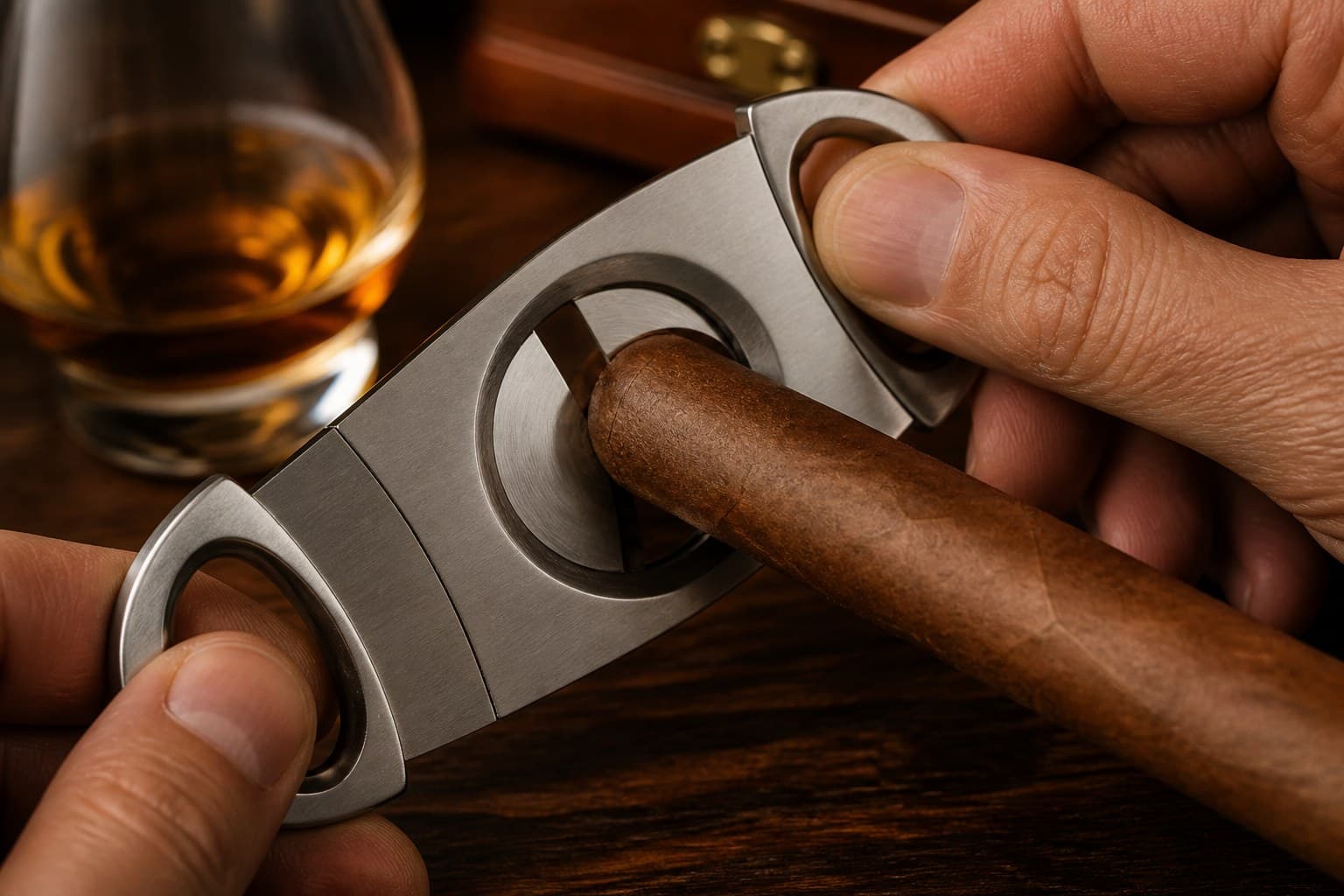
The closed head is finished with a cap leaf. You want to cut just above the shoulder—enough to open the draw, not so deep that the wrapper unravels.
Choose your tool
| Cut | Best for | Watch-outs |
|---|---|---|
| Straight (guillotine) | Most vitolas; all-rounder | Dull blades crush instead of slice |
| V-cut | Concentrated draw; some prefer flavor | Too deep on fragile caps |
| Punch | Firm heads; smaller opening | Can feel tight on dense cigars |
- Open the cutter fully; don’t nibble with a half-close.
- Position just above the shoulder; commit in one motion.
- Cold draw — air should move with light resistance, not a whistle or a brick wall.
- If too tight, shave a hair more; don’t hack halfway down the cigar.
How to light a cigar
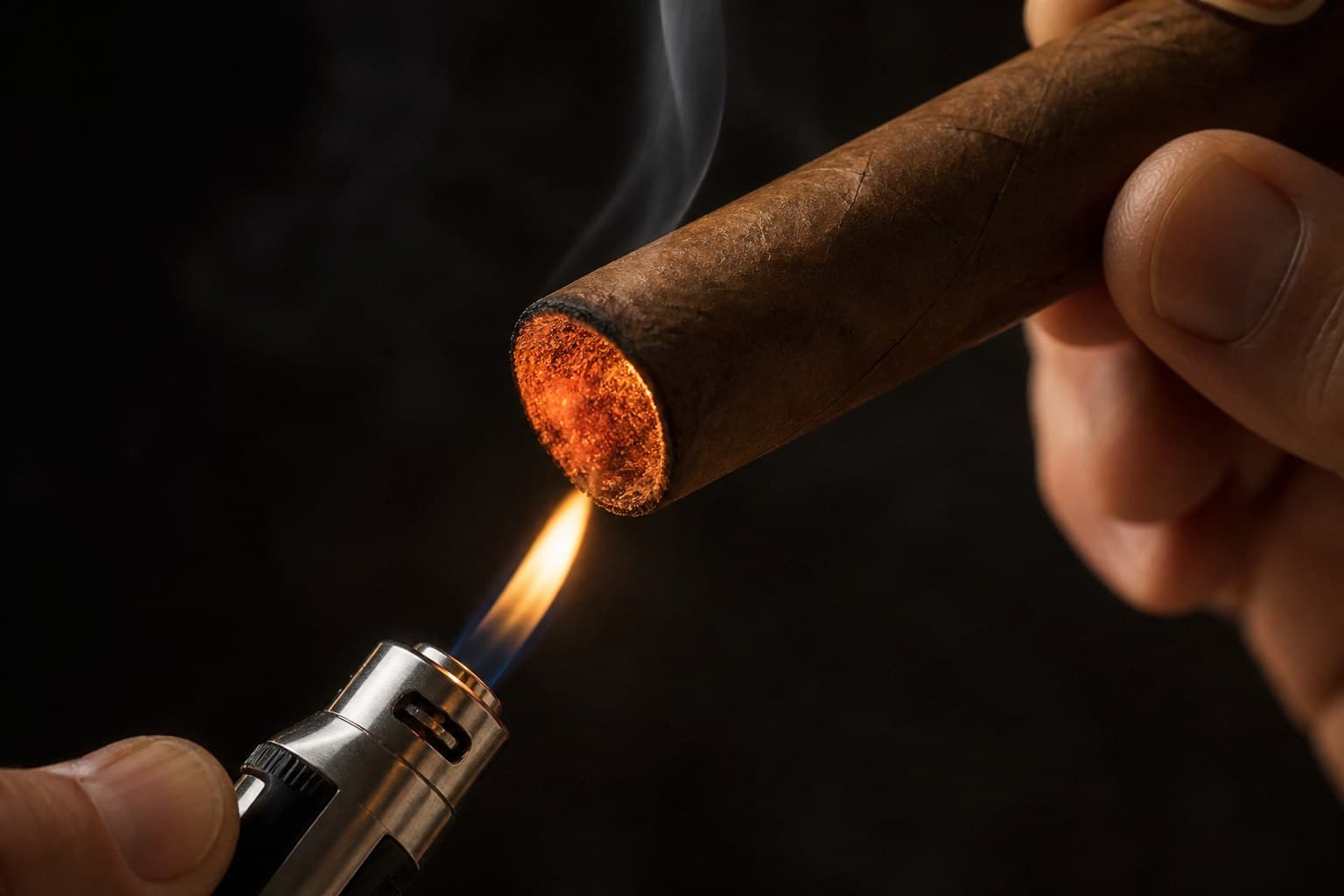
- Toast the foot — hold the flame near (not on) the tobacco; rotate until the foot glows evenly.
- Bring to lips — take gentle puffs while continuing to rotate; build an even cherry.
- Check the burn — look at the foot; touch up the slow side with a careful kiss of flame if needed.
- Settle in — don’t machine-gun puff; overheating bitterizes the smoke.
Soft flame is forgiving indoors; torch is handy in wind. Either way: heat the foot, protect the wrapper.
Fixing canoeing and tight draws
- Canoeing — toast the slow side; rotate more; check for wind and soft spots
- Unraveling — cut was too deep or glue failed; lick is not the fix—gentle pressure and accept a imperfect stick
- Tight draw — slight deeper cut or a draw tool; some plugs are construction, not your fault
- Won’t stay lit — often humidity or under-toasting; retouch evenly
After the light: log the session
First-third flavors are the cleanest signal of a good cut and light. Capture them in a free cigar tracker — and if you’re pouring, check bourbon pairings once the burn is stable.
Keep the box honest with a virtual humidor so “that stick that drew perfectly” isn’t a mystery brand forever.
Bottom line: Cut shallow and clean, toast before you puff, rotate for an even foot. Technique is free; ruined wrappers are not.
Frequently asked questions
Straight answers for search, lounges, and late-night humidor debates.
Where exactly should I cut a cigar?
Just above where the cap meets the shoulder—enough to open the draw without slicing into the body. Too deep and the wrapper can unravel.
Guillotine, V-cut, or punch?
Straight cut is the all-rounder. V-cut concentrates the draw; punch suits firm heads and smaller openings. Match tool to vitola and preference—practice on cheap sticks first.
Should I use a soft flame or torch?
Both work. Soft flame is gentler for toasting; torch is faster outdoors. Keep any flame off the wrapper—heat the foot, don’t scorch the sides.
Why is my cigar canoeing?
Uneven toast/light, wind, or a soft spot in the bunch. Relight the slow side carefully, rotate as you smoke, and fix humidity if the stick was dry or over-wet.
Should I wet the cut end?
No. A clean cut and calm first puffs are enough. Licking or dunking can damage the cap and invite unraveling.
Further reading
Related guides in the Estelia & Ash Co journal.